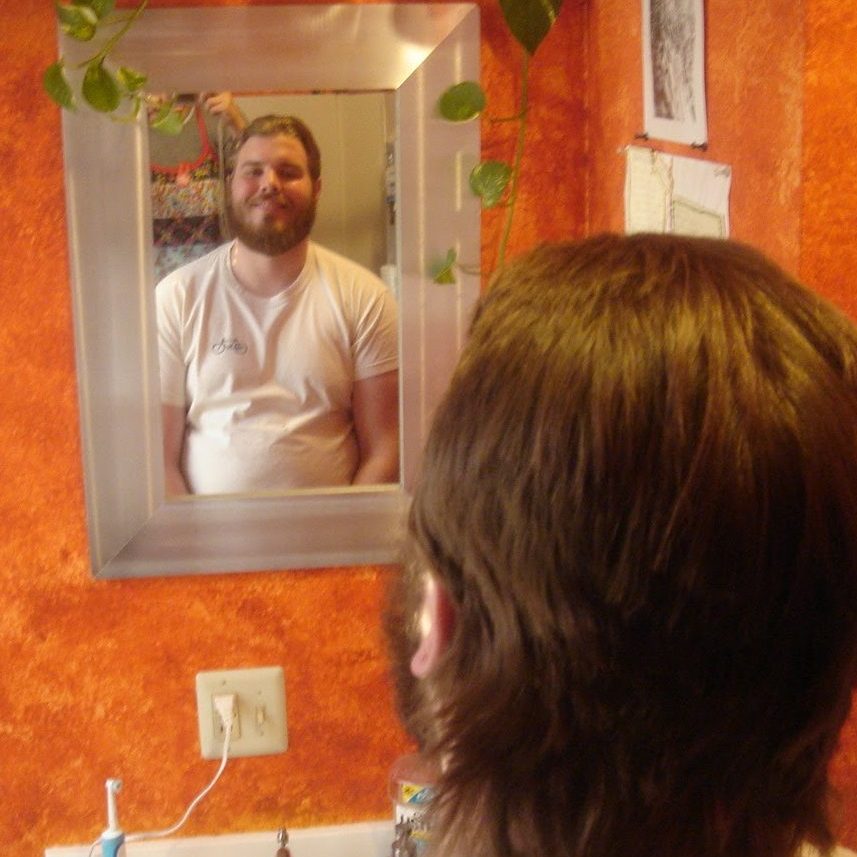
A friend of mine often says, “It’s so nice to put my eyes on you.” I appreciate the intention of that sentence. Seeing is not just a passive thing that happens when she does it. She is really looking at me. I hope to look at others that way. I want to stretch out the sentences that describe my seeing, too.
When you were a kid and you learned to read, at some point a switch flipped. At some point you got so good at reading that it became second nature. There was a time in your life when words passed you by without notice. Now, when you see a word in your language it is almost impossible not to read it. “Putting your eyes on somebody” is not like that. People are so easily words that pass you by without notice. I want to try to do otherwise.
What if we read people less like words on a billboard and more like poetry? When you’re reading a poem, you remember that each word was chosen with the intention to communicate something deep. Each word is not something that could or should be understood automatically. Poetry demands pauses. It is arranged artfully. Commas and semicolons are brooded over. Not that word but this word was put next to the other just so. A book of poetry is inherently not a page turner. I don’t want the people in my life to be page turners either. I want them to belong, so I must put my poetry reading eyes on them.
When you look at someone you could just read the word, so to speak, of what is happening in front of your eyes: “Human.” But when my friend “puts her eyes on me” she means to communicate love and belonging. She is seeing me on purpose. In my work as a chaplain, I have come to know the power of seeing and being seen. Belonging is such a deep craving of every human soul. In my work, I really want to get close to that deepest desire if I am able.
We can participate in spreading belonging. It starts with letting yourself be seen (which ain’t easy). It starts with seeing someone else (on purpose!). When I enter a room to meet someone in the hospital for the first time, the first threshold I must cross is my own anxiety about being seen. Will they want to meet me? Do they respect my position? Are they too exhausted? Am I bothering them? I have to take a big step over all that and find out. Here I am. Will you see me? The next step is mutual, and it doesn’t always happen, but it’s crazy how much it does. I put my eyes on them. I stretch out my heart. I make emotional space for them. I invite them into the room of my gaze. And often, they show themselves. Often, they unfold their poetry. It is a beautiful thing.
Attention may be one of the only truly non-renewable resources we have. Because we are giving ourselves to another — we are giving them that moment of time — time which we will not get back. But showing up for one another, to be seen and to see, is at the heart of my aim to spread belonging in a world where isolation dominates. When I look through the lens of Jesus at all the beloved people in my life and aim to really see them, my eyes are opened, and I can take even more of them in. It’s remarkable how the energy sometimes flows.
Hagaar was the first person in the Bible to give God a name. She called God “the God who sees.” Genesis 16:3 “She gave this name to the Lord who spoke to her: “You are the God who sees me,” for she said, “I have now seen the One who sees me.” Hagaar was alone and lonely, too anguished to watch her child die in the desert, she even separates herself from the child. She was used and discarded by God’s chosen family, but God does not discard anyone. God comes to find her. God cares. God sees.
And how many times in the Gospels does Jesus “see” people? How often do the writers say that he looked or saw? It’s a lot! (here’s a few examples).
When we look at one another with eyes of love — when we really “read the word” of another person, as if they were God’s poetry — we participate in God’s work. We join the God who saw Hagar in his project of seeing and being seen, of belonging. We see with Jesus who spent so much time looking at the people he loved; we spread belonging. This is the heartbeat of my work in the hospital, and I am so glad I get to do it because it shapes me. It makes my eyes wider.
 Today, if you hear his voice