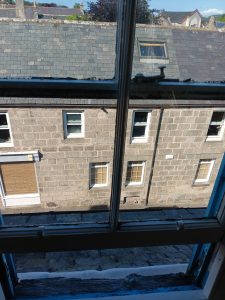
On July 6, 2026, I went on pilgrimage to Scotland. I wanted to see the places dear to me through the eyes and heart of another, George MacDonald, who was born on September 10, 1824, in Huntly, Scotland, on the second floor of a stone house in a room in which I would soon stand.
To breathe the sea air spiced with ripening barley, to walk the heath and wade the burns with sheep alone as witnesses, to laze in wildflower curtained views of Scottish skies, to see the actual alleys and castle stones which painted the imagination of a man whose imagination had so painted mine: this was my mission.
In going alone I unharnessed my intuition, and broke time open. I moved quickly with much to see in a wrong-sided rental car and surprisingly resilient legs, back and bones. When I left my home, I was just recovering from a bout with sciatica that had left me hobbled, miserable and worried that this perhaps once-in-a-lifetime trip would be ruined. Thanks to interventions of medication from Dr. Kaffi, and novel interventions from my mad scientist physical therapist friend, Jeremy, the pain was subsiding in the days before the trip. I was consciously blessed by the relief as I managed to sit for most of the seven hour flight from Philadelphia to London in only mild discomfort.
I had but one and close to three-quarter days to walk those MacDonald-hallowed lands – from the lowlands into the highlands, from the shires of Inverness, Nairn, Elgin, Banff, Aberdeen and back to Inverness, a circuit along the coast of the Moray Firth, across the countryside and into the Cairngorm Highlands, and back up the A9, starting and ending at Inverness International Airport.
One and close to three-quarter days was enough time to visit with three heroic men, two of them fictional and one of them historical, each of them with vivid scenes to show, all of them ostensibly encompassed in the mind of a man who died in 1905, who I tell my friends and acquaintances about almost daily. It would be me, Malcolm, George and Gibbie. But of course that is not quite true; it was also me and Jesus with Malcom, George, and Gibbie. But that is yet not true enough; it was also me and Jesus with Malcolm, George and Gibbie; and Wilhemina, Martin, Aaron, Alan, Andy, Jake, Fiona, Marshal the Dog, Scott Cambell (bloody Camel!), Phillip, Michael and Judy in absentia, the library clerk whose name I never knew, Lorna, Dr. Navin, the three-day-a-week Gordon Castle guide who encouraged me to hop the fence, the Gartly neighbor who invited me into her kitchen, many, many sheep, Linda who listened to God’s voice, and one horsehead seal who could so easily have been mistaken for a mermaid.
I call this journey a pilgrimage because George MacDonald is a saint. In much of the way I mean it, I am sure he would be aghast. I am sure he would discourage my hero-worship, but I am prone to idealization and romanticism. What did MacDonald expect when he created such saints if not to beguile me with their goodness and be obliged to receive the honor of their influence upon me? I give God the glory, yes, but it shines through George’s pen.
The flight from Philadelphia to London was long, and lengthened, by my back muscles’ malady. I slept some on the overnight flight but not nearly enough. Leaving the airport during the five and half hour layover was not recommended by Heathrow regulars, but I did it anyway and was rewarded by the renewed energy of making the dash in and out of the city center successfully.
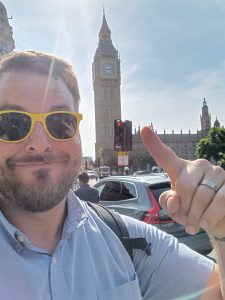
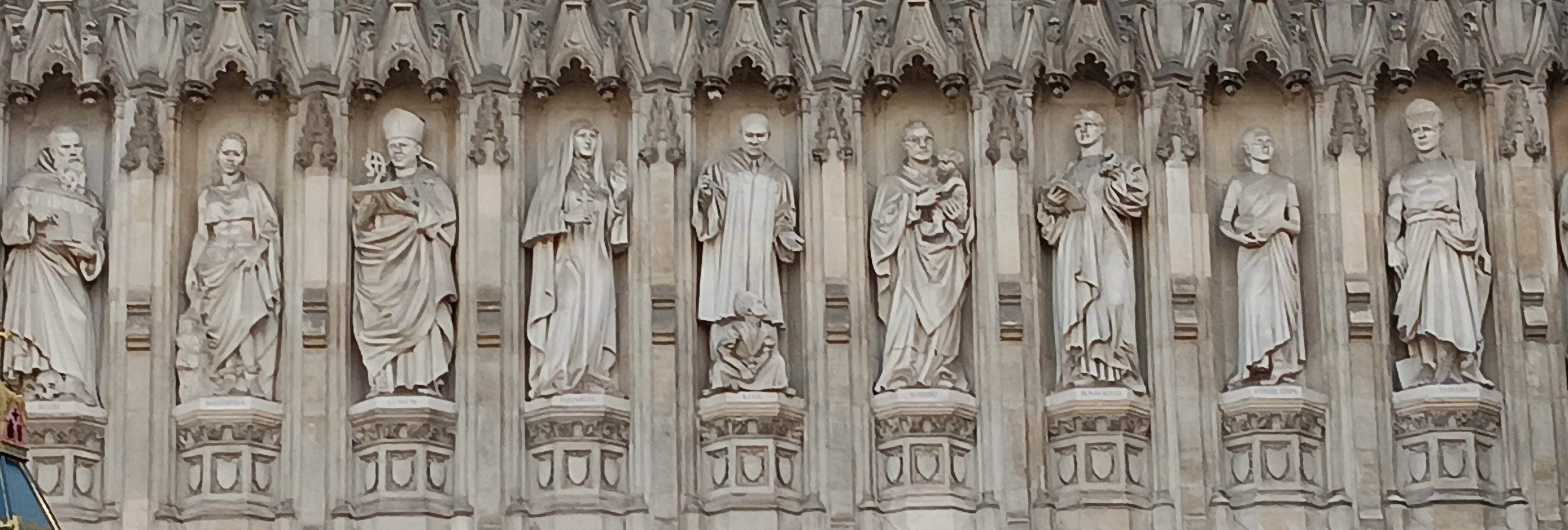
The only objective of the London Dash was the subsequent capacity to say I had actually been to London, with proofs in the form of souvenirs for my sons and a selfie of Big Ben (me) with Big Ben (my tower). I accomplished quite a bit more by hopping on an e-bike, including an unexpected encounter with another hero, Rev. Dr. Martin Luther King Jr. in statue above the East Gate of Westminster Abbey (where Malcolm and Blue Peter said, ““Eh, Peter! sic a blessin’!” and “There canna be muckle o’ this i’ the warl’!”); and a visit with John, Paul, George and Ringo up at Abbey Road, which was a fifteen-minute cycle that pumped my blood and earned the pasty I bought at Paddington Station to eat on the Heathrow Express return trip.
Inverness International Airport is small. With no checked bags, just a duffle backpack bought special and proven perfect for the trip, I breezed to the car rental and set off clipping left-sided confoundingly passenger-sided curbs. I got the hang of it by the afternoon of the next day and no damage was done according to the company employee to whom I dropped off the keys. The airport is to the northeast of Inverness proper and I thought it would be a shame not to see the charming town and its castle so I drove southwest and realized on the way that the Ness of Inverness is THE Loch Ness. I don’t know why I hadn’t made the connection. My itinerary was not very full that day; past Ben had been gentle with his future self; but present Ben was filling the late afternoon with might-as-well-while-I’m-here-s.
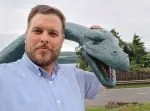
Before I made it to Inverness I happened on the fields of Culloden where, in 1746, the Duke of Cumberland decisively defeated the Jacobite forces of Bonnie Prince Charlie in a brutal battle lasting under an hour. I snapped some pictures in the only rain of the trip (which was inconceivable), then onward to have a spy for the secretive monster. It turned out she was easily spotted. Several convincing fiberglass sculptures were there on the shore. I drove down the stunning lochside long enough to find an open shop to buy my son a T-Shirt (“Undefeated Hide and Seek Champion”) then turned around and headed toward Burghead on the Moray Firth where I had booked a night in a room at the Public House. Somehow, I had managed to get an hour and a half away from my convenient lodging.
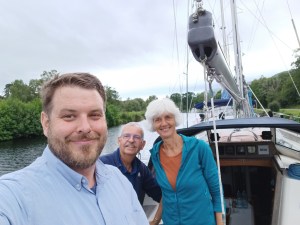
Still clipping curbs on the winding road north, I suddenly slammed on the brakes when a middle-aged man threw up his thumb as I passed. It was my new friends Martin and Wilhemina (Wilma) who had missed the bus and wondered when or if another would come. It would have been a very long walk for them back to their sailboat on which they had come up from the Netherlands. Naturally, they invited me onto the boat for a tour and a beer (free beer would prove the evening’s theme). We chatted about saving two to three months of vacation for sailing adventures, Wilma’s psychotherapy practice, the life and workings of an ocean-going vessel, and George MacDonald as my reason for being there.
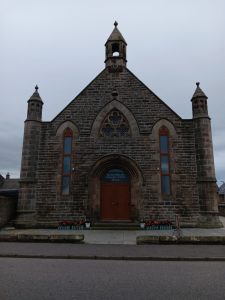
Now, much, much later than planned, I drove to the absolutely charming town of Burghead, where one church building is a convenience store across the street from another church building which is a community center. The kitchen was closed at the bar so I walked up the street to said church-building-convenience-store and bought the first of five sausage rolls consumed in my day and close to three-quarters. Even cold, it was grand.
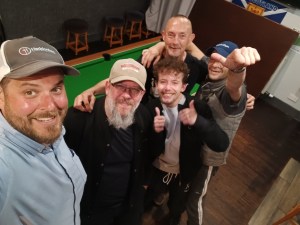
The room upstairs at the Pub was great (the towels were so plush and soft!). The company in the bar below was even better. The Round of 16 World Cup match between Colombia and Switzerland was on TV. Aaron and Andy were playing pool. I know Scott Campbell’s last name because he showed me his semi-pro dart playing page profile on Instagram. He was working on a plaster job nearby. I convinced him to beat me at darts. Alan was tending bar. Fiona, her husband, and Marshall the Dog arrived not long after me. Everyone named so far bought me a Tenet Lager that night (except Marshall). Jake, the artist who sold a painting to Matt Damon while they were shooting the Odyssey movie nearby, came later and I realized I should probably buy someone a beer. So he got one from me. Alan stayed open later than usual so we could see Colombia lose in a penalty shootout. I went to bed drunk with only the stairs to navigate.
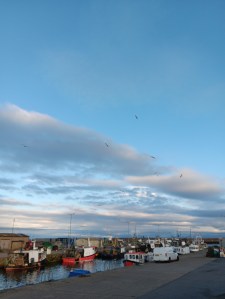
I rose very early the next morning on account of the jetlag and went out to greet the morning and acquaint myself with the boats of Burghead Harbour. There was Rhea Marie, Lady Anne, Kalisto, Ullapool, Achilles, Winner, Murray Lass, Vagrant, Utopia, Flourish, and Harvest Reaper. I started writing names down after I saw Ulapool and Kalisto bobbing next to each other. They were too otherworldly to forget.
An ancient Pictish fort lay beneath the Visitor Center, which, itself, was a converted World War II lookout tower atop the Doorie Hill. The view from the tower’s windy top gave shining sea views on almost every side, for Burghead protrudes into the Moray Firth like its namesake head. It’s no wonder the Picts made a burg (fort) there, nor that the British military used it to watch the sea for German submarines. Across the harbor from the Doorie Hill several pillboxes have begun to sag into the sea, a worthy allegory for the peace enjoyed by myself and the other harbordwellers that morning. As I was heading down the hill, the first dogwalkers were out on the hill with me, wading through red poppies and sniffing for traces of the past.
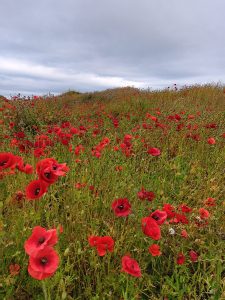
Before I returned to the Harbour Inn, I swam beside the caravan park in the cold North Sea and was very refreshed. One hot shower later I was in the Pub, duffle packed, to eat the full Scottish breakfast I had ordered the night before – eggs, sausage, bacon, haggis, black pudding, beans, mushrooms, toast and earl grey tea. Phil, the owner of the Pub, made breakfast and chatted with me and the salesman who had also stayed the night. Before 8:00 am I was off for the only full day of the adventure, and it was very full. By the way, haggis is just scrapple with a different spice profile.
Traveling East on the northern coast, the first stop was a cliff trail overlooking sea bird nests and a place called Sculptor’s Cave, a famous historic sandstone sea cave named for the 6th-or-7th-century Pictish symbol carvings (including fish, mirrors, and crescents) chiseled into the rock. I couldn’t find a way down the cliffs to see the carvings, but I found the cave opening from above. The paths were dicey to say the least. I fell in a gorse bush and was picking spines out of my hand all day.
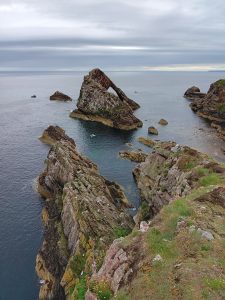
The next stop was Portnockie where I wondered if Whale’s Mou, the largest sea cavern in Portknockie’s immediate coastal cluster, was the place where the fisherfolk of Port Lossie gathered for prayer. Bow Fiddle Rock was as postcard ready as possible. I climbed to the highest spot and watched a tour boat get up close to the spectacular rock formation. Later, in Cullen, I learned it was certainly not the Whale’s Mou, but St. Duane’s Den or “Preacher’s Cave” at the East end of Cullen Beach where the fisherfolk had gathered for their conventicles in MacDonald novels. I would have liked to creep into the back like the Mad Laird and Phemy, but while in Cullen, I decided I didn’t have time to make the trek to the far end of the beach.
Instead I imagined all the doings of Malcolm and the Marquis of Lossie in the Seaton (Sea-Town) and the Alton (Old-Town) above it. This included Cullen House, AKA Lossie House, AKA the “Muckle Hoose”, AKA today a very fancy condo building that you can only access by foot on Tuesday and Friday afternoons from 1:00 PM to 5:00 PM (I transgressed on Wednesday); the Auld Kirk (Old Church) AKA the site of Malcolm’s mother funeral; and Cullen’s town square where George MacDonald stayed at the Seafield Arms Hotel while researching for the novels, and where I ate a giant bowl of award-winning Cullen Skink, a fish chowder (Skink is a Scots word for a shin, knuckle, or hough of beef, which has developed the secondary meaning of “soup”). I was aided in my adventures by a lovely book produced by Michael and Judy Phillips, George MacDonald, Cullen, and Malcolm.
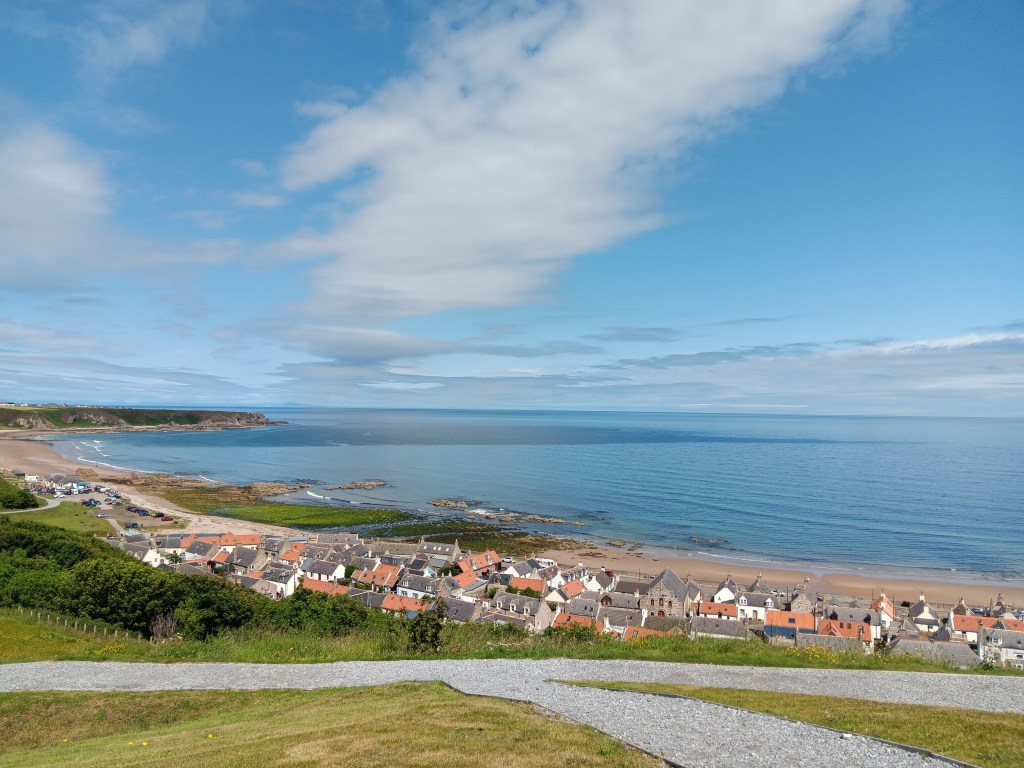
I asked several people in town whether they knew who George MacDonald was. The answer was almost entirely “No.” But one man overheard me talking to the gift shop owner on the square. “I know the man you’re talking about,” he said. “He lives near here, but they just left a week ago.” He was talking about Judy and Michael Phillips. How neat would it have been to meet them there! The man in the giftshop who knew them was too aptly named. Malcolm!
I knew that Judy and Michael had put up a memorial bench on a hill somewhere in town, but I couldn’t find mention of it in the book. I have since discovered it may have been placed after the book’s publication. At the discovery of the bench atop Castle Hill, I was brought to my knees, and though George would again probably be aghast, I choked out, “My Master!” through surprising tears. I think the tears sprung from the sudden togetherness of our mutual esteem. Someone had said in a plaque on a bench what I had come thousands of miles to express. The unacknowledged aura of the place, its haunting by the characters of Malcolm and The Marquis of Lossie and all the joy and strength I drew from their stories; together with the unrecognized brilliance of George MacDonald in his native lands, his relegation to esoteria; conspired in a moment of drama that moved me to tears. Here on this bench the true measure of the man was shining like the glint of an exquisite pearl long sought, resounding like the thud of spade against treasure buried in a field, producing in me a strong emotional response.
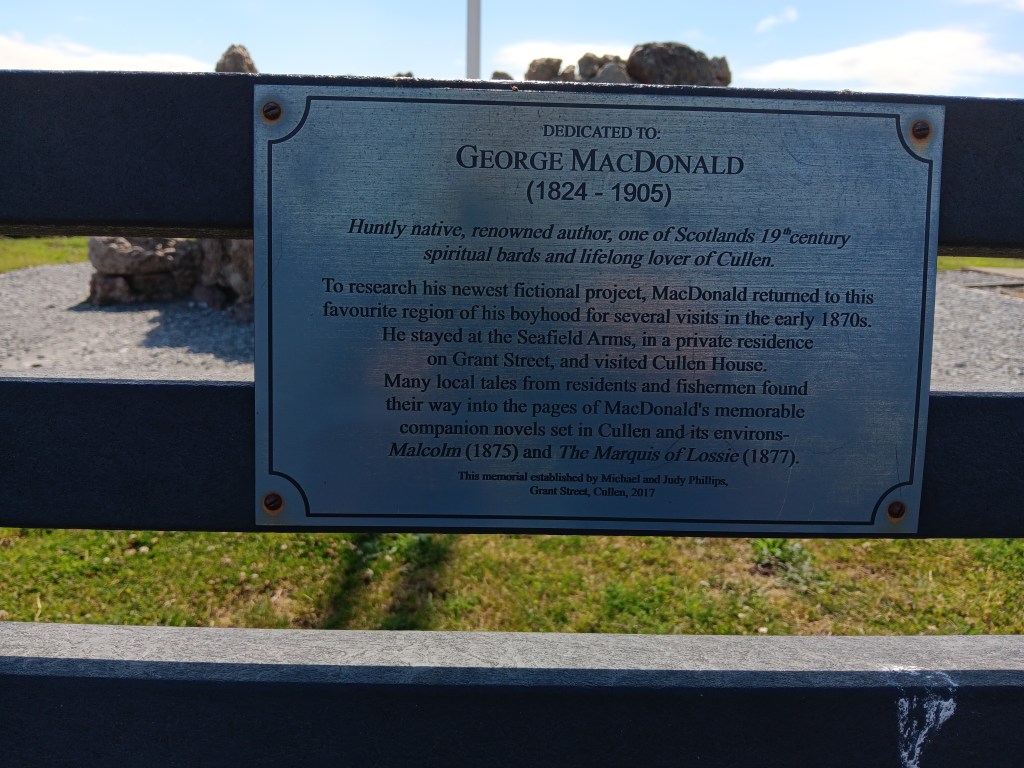
Thank you, Judy and Michael, for lighting this candle.
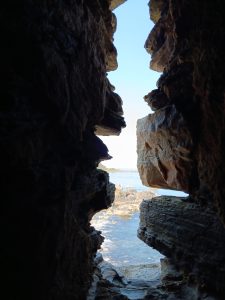
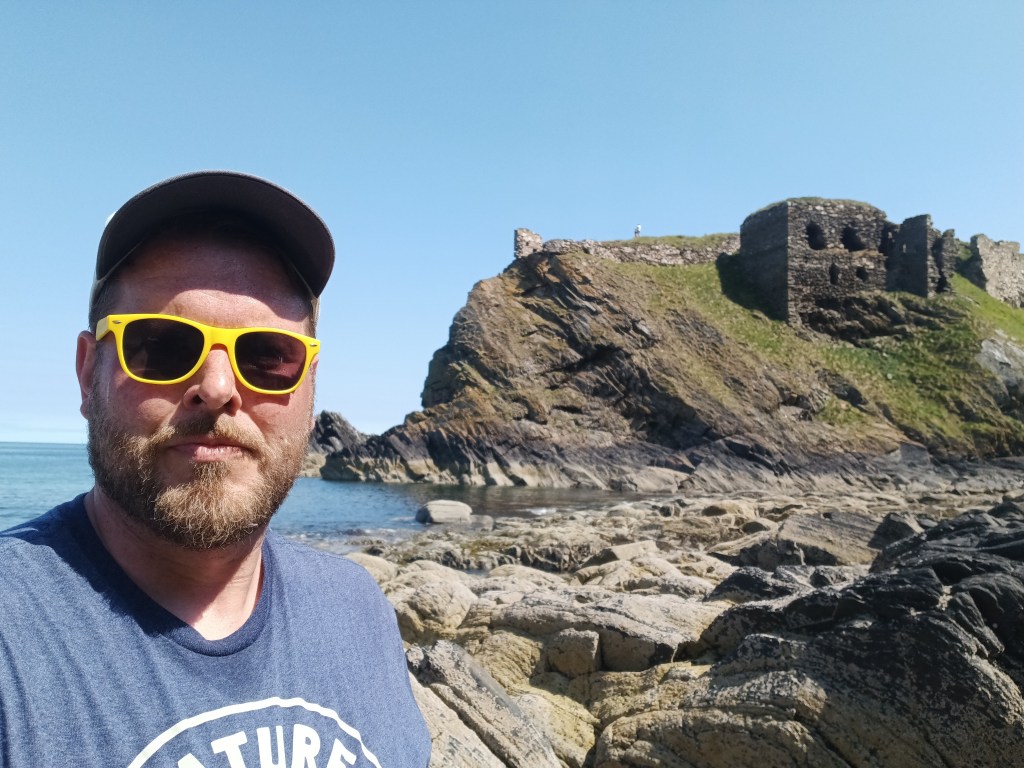
After lunch I was off to Huntly via Findlater castle, AKA Colonsay Castle, where Malcolm saved Lady Florimel from falling into the sea. On the path down to the castle I discovered the smell of ripening barley though I could not yet give it a name. Findlater Castle goes back to the 13th Century at least. The fact that parts of it still stand is mind-boggling. I went inside the chambers and found a hole that could have plunged a lady into the sea. George had been in this very ruin.
To get the proper selfie, I had to descend to the coast below the clifftop structure. This drew me onto the coastal rocks and too far into an adventure to turn back. Sunnyside Beach was not on my itinerary, but I thought I would take a look since it was right there next to the castle. That morning Phil had shown me pictures of Burghead Harbour with the boats from the Odyssey movie moored in it and informed me that Sunnyside Beach was where parts of the Odyssey were filmed. Instead of twice walking back up to the top of the cliff from down at the water I decided to see if I could round the point on the razor sharp rocks piled up at the water’s edge. It was exhilarating for the challenge and danger of it. The last twelve yards of rocks were submerged in water, and much more would have been if I had come while the tide was high. Instead of slipping on the submerged rocks, I swam for it with my bag and shoes in one hand above my head. The water was delicious after the quarter-mile rock scramble.
As soon as I got safely to the beach, I put my things down and went back into the water. For about 20 minutes on the beach I was totally alone, or so I thought. I was in and out of the water twice. On the second swim I was making for a rock I had in mind to jump off if I could scale it, but as I swam hard through the crystal water I was startled by a large brown head bobbing only yards away. I swam backwards a couple of strokes and turned around. It was a seal, a horsehead seal I later learned with first-hand founded approbation of the taxonomy. The sea-horse might have been a mermaid with its curious eyes and slick backed hair. There was a moment of obvious human-like connection between us. I waved and said “Hi friend!” in excitement that was half residual fear from the initial fright and half absolute wonder. It would not have been surprising if I had followed her to the bottom of the sea and drowned.
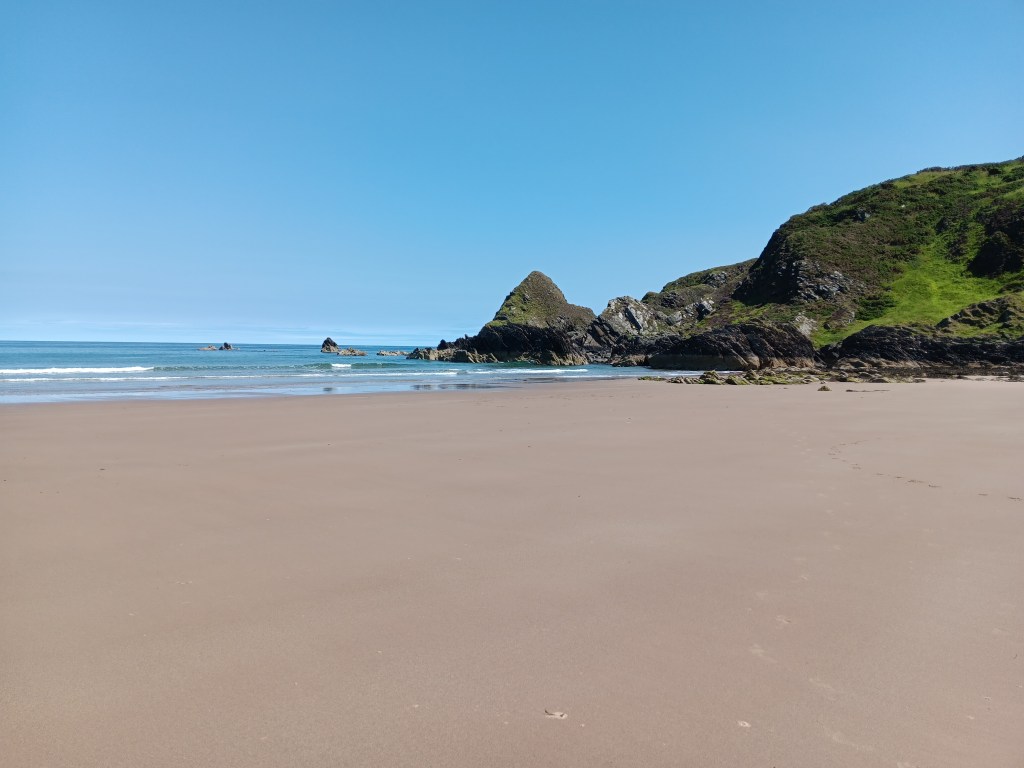
I was joined on the beach by a family and their dogs but the sand was so wide it seemed I was still alone. By the time I was ready to go I was once again startled. This time it was the hour. The unscheduled excursion had taken almost two hours. I would never make it to Huntly before Orb’s Book Store closed at four. “So be it,” I said to myself. “I don’t think anything could beat that adventure.” I walked barefoot up the steep and sometimes slick path, then along the clifftop path which offered stunning views of my fairyland below, and then through the still unidentified barley to the wrong-sided rental car where I quickly changed my clothes and sped off to George’s hometown.
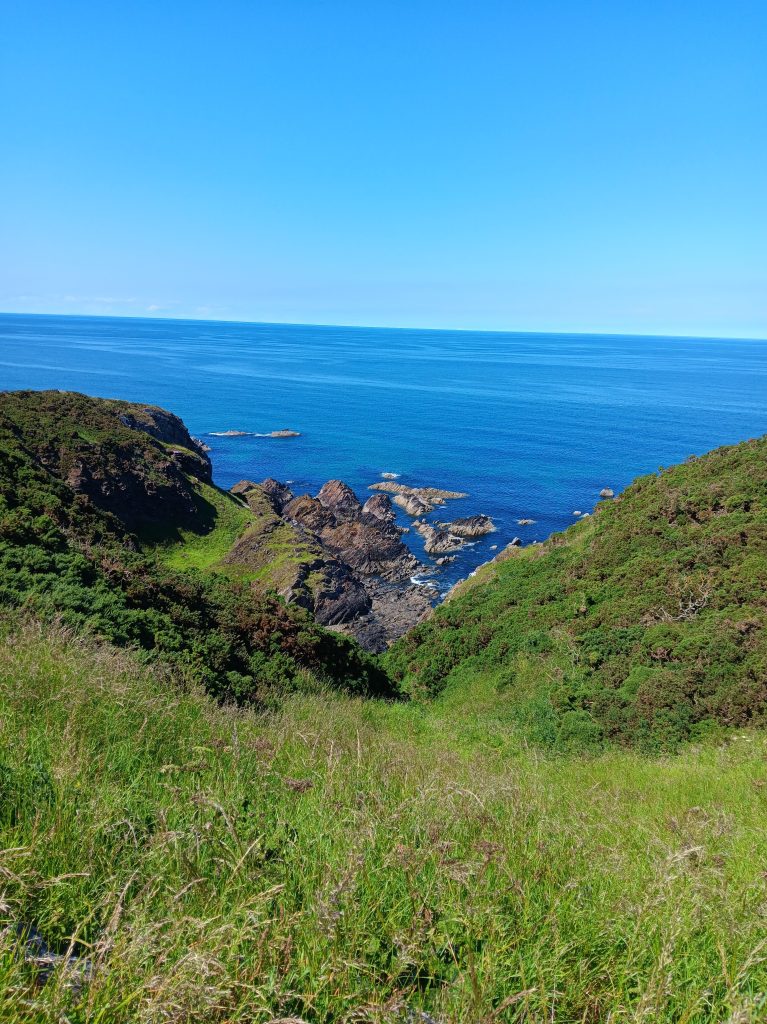
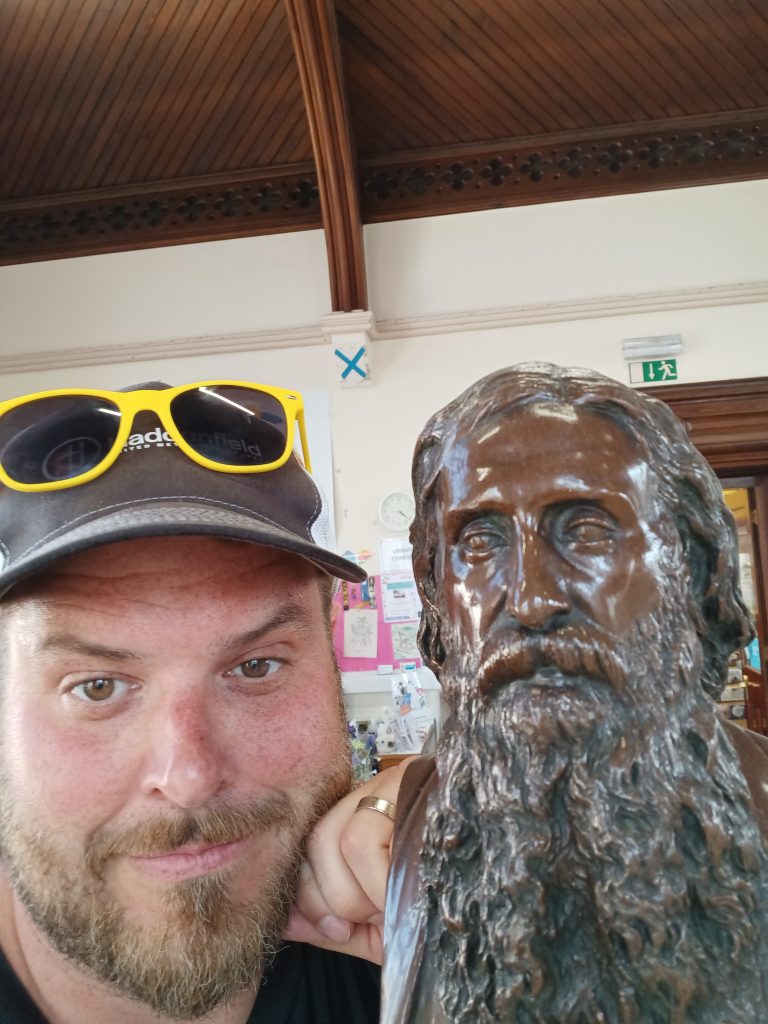
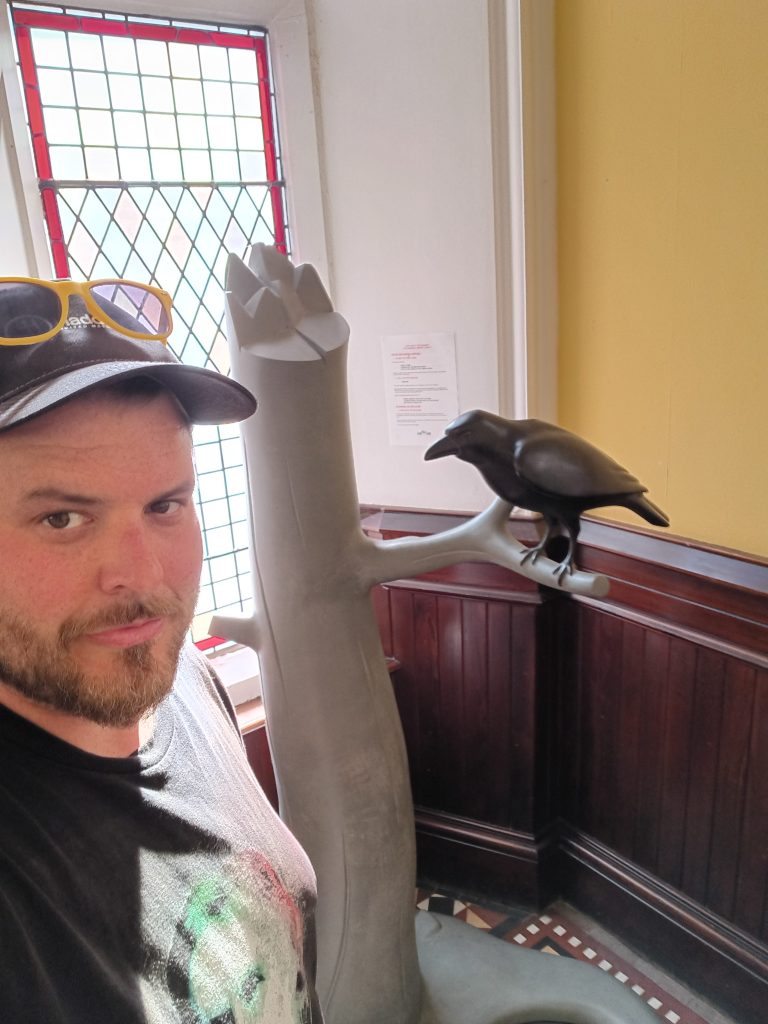
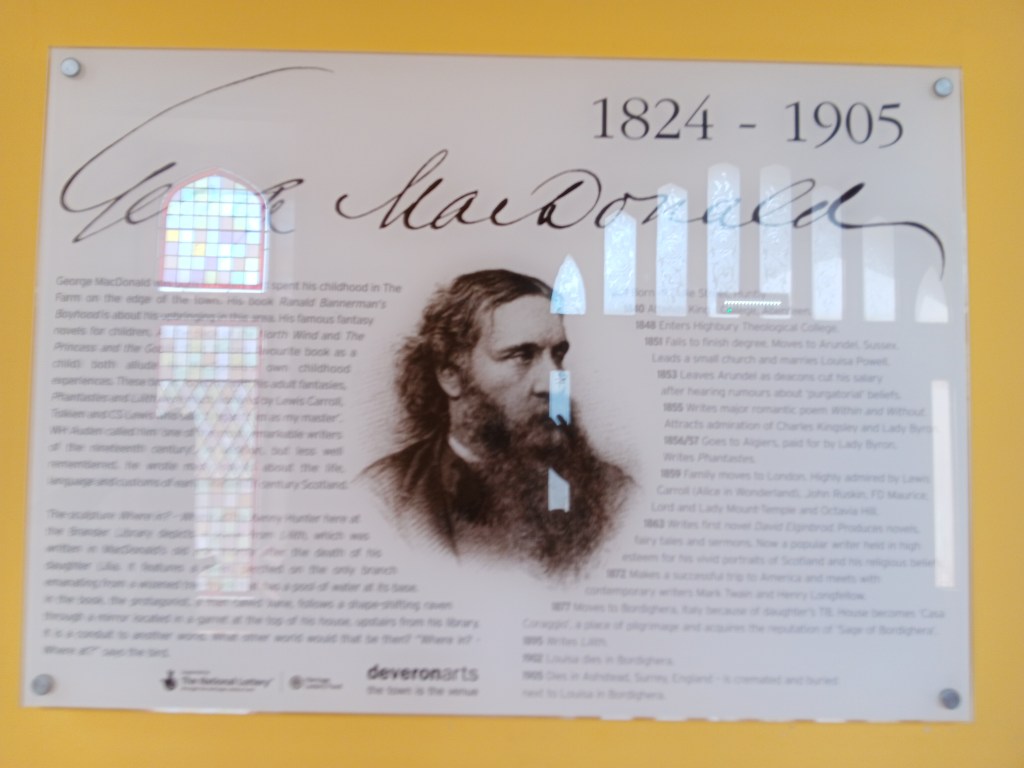
The young woman behind the desk at the Brander Library on the square in Huntley responded, “I can’t believe you did that!” after I told her I crossed the Atlantic Ocean just to be in her town. The Brander Library is definitely the nicest building on the square. The entrance has a nice informational panel about George MacDonald, a not so nice (IMHO) sculpture of Mr. Raven in bird form from MacDonald’s novel, Lilith, and a carved medallion portrait of MacDonald in profile. Upstairs there was a display of MacDonald books and a stack of laminated photos. Of course, the young woman behind the desk was aware of George MacDonald, but dumbfounded by my intense interest and enthusiasm. I imagine she may have smiled when I took a selfie with the bronze bust above the book collection. I left with a general sense of dissatisfaction in the level of homage to my hero.
Out on the square it was hot. What made the North Sea plunge so delightful now made my Huntly ramble very sweaty. My only guide was Adam Walker’s blog post about a tour given by Patrick Scott, local historian, to George MacDonald conference attendees in 2017. Though rather detailed, and very helpful, the directions were imprecise. “The Stannin Steens, remnants of a Neolithic stone circle mentioned in MacDonald’s Robert Falconer… behind the statue of the Duke… and the Gordon Arms Hotel, featured in Robert Falconer as the ‘Boar’s Head'” were all easy to find on the square, but when I ventured down McVeigh Street to find “the old Congregational Church or ‘Missionar Kirk’, as it is called in Alec Forbes,” I was confused and obviously looked it. A woman who was cleaning out her car asked me if I needed help. She had no idea who George MacDonald was or if the building across the street used to be a church. She did know it used to be a bakery. I was taken by her words when we parted. “I live right here.” I was sure that if I needed anything at all I could knock on her door. This theme developed throughout the afternoon.
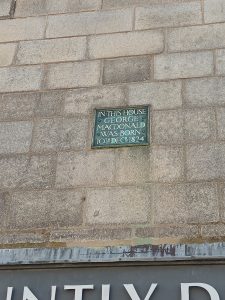
It wasn’t too hard to find Duke Street and the birthplace of George MaCDonald after that. I took a picture of the blue plate on the building as an employee of the dental office that now occupied the building was coming out of it. I told her, “You work in the place where one of my favorite people was born.”
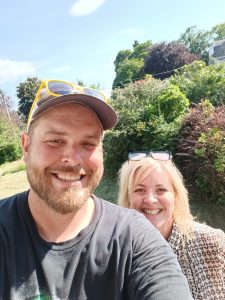
Her name was Lorna, the office manager of the dental practice. She invited me in for a tour. I stood in the room where he was born. I looked through the back window to the yard where Young George/Robert Falconer might have stolen to gain the solitude of the abandoned family factory. I decided the former bakery, now peeking over the houses across the street from George’s bedroom window, was indeed the “Missionar Kirk.’ I was giddy and grateful. Lorna urged me to wait for her boss, Dr. Navin, who owned the property and the property next door which had been George’s grandmother’s house. She filled up my water bottle and I waited in the air-con for Dr. Navin.
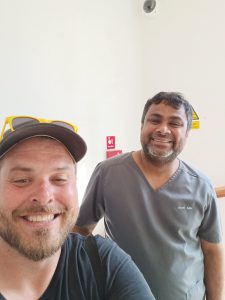
When he was done with his patient he gave me another tour with more information as we chatted about my love for MacDonald and his budding interest. His wife had read him At the Back of the North Wind aloud. He wanted me to wait another hour so he could show me the house next door which was largely untouched since the earlier half of the last century, but I regretfully declined. I still had to make it all the way to Aviemore in the Cairngorms if I wanted to sleep in the accommodations I had booked for the night.
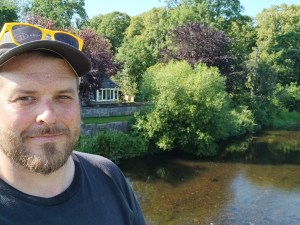
Next I found Bleachfield Street, Bleachfield Cottage and the remnants of the MacDonald Farm on the River Bogie where George spent much of his youth. I imagined George laying on the back of his horse reading a book like Donal Grant in the yard of the now very suburban looking place, but couldn’t linger very long. I still had to see the castle ruins before I left town and it was already six o’clock.
Of course, the castle was also closed, but the young woman at the library had told me it was easy to get in from the back. I walked around the castle and to my dismay there were large signs prohibiting entry including warnings about cameras. I was standing rather conspicuously at the fence with the sign when a car drove up and made me nervous. An older gentleman got out and I turned away from the gate to avoid suspicion.
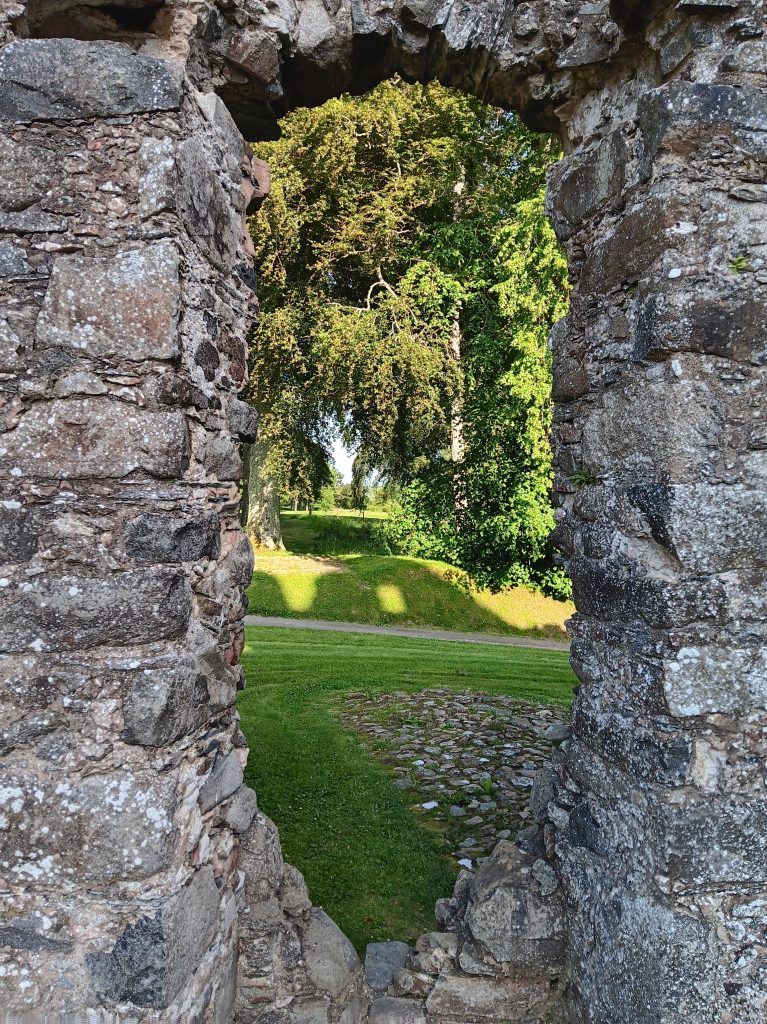
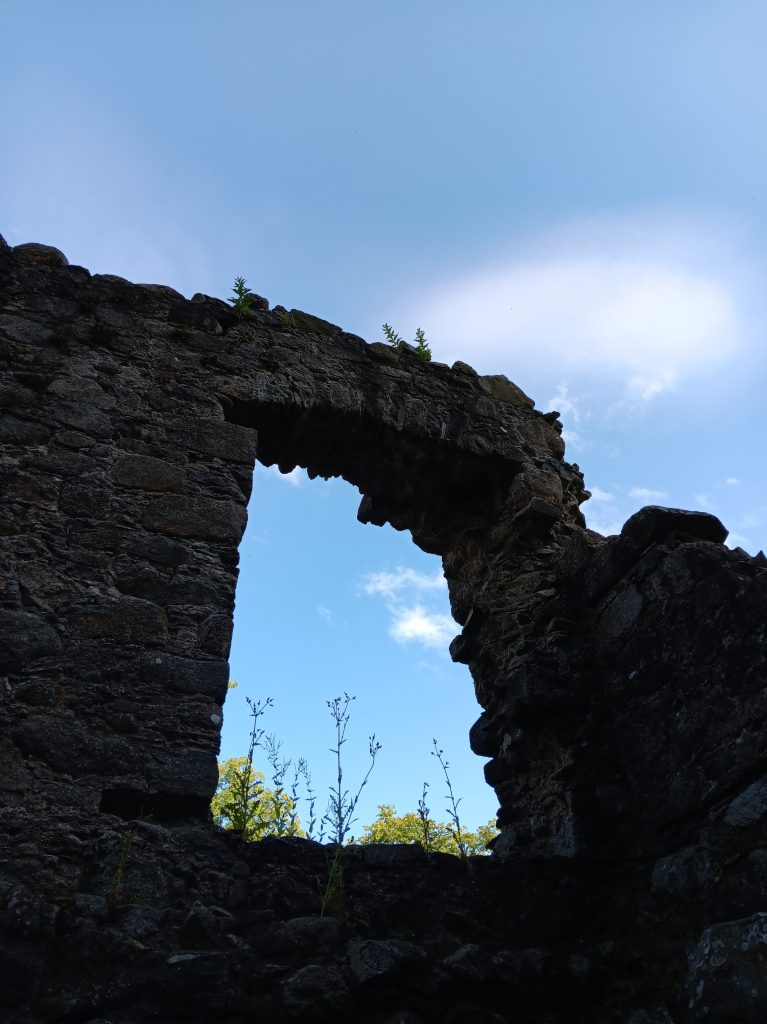
He said, “Oh, go on in. There aren’t any bloody cameras. I should know since I volunteer as a guide three days a week. And when you leave you can just go out the front.”
It was the exact opposite of what I expected from him. I gladly hopped the fence and snapped a few photos of the magnificent ruin, which was already centuries ruined when George was a boy. I relished the enchantment I got to share with George, but then I was off.
I left town in a hurry. I had a two hour drive through Cairngorm National Park – the scenic route. I wanted to also taste the enchantment of the hills which paint the backdrop of his novels. Not far from town I became aware of my thirst. I had been sweating as I sped to see as much of Huntly as I could in such a short time. I pulled off the A97 south of Huntly into a little town called Gartly to see if I could find a shop. The strangers who had helped me so much already in Scotland opened my window instead of my phone screen so I could ask a woman in her driveway if there was a shop in town.
“What do you need?” she asked.
“I was hoping for a drink.” I answered.
“You want a beer?” she smiled.
“No, no, just water.” I held up my empty water bottle.
“No, no shops in town. You’d have to go back to Huntly.” she said.
The next moment I was in her kitchen filling my water bottle from her tap. She also insisted on giving me two cold plastic water bottles from her fridge. How strange to welcome this stranger so quickly? My gratitude was graced with grace when we exited and I noticed that someone was waiting for her in her car. She made them wait for me! I bet she would have given me beer if I wanted it.
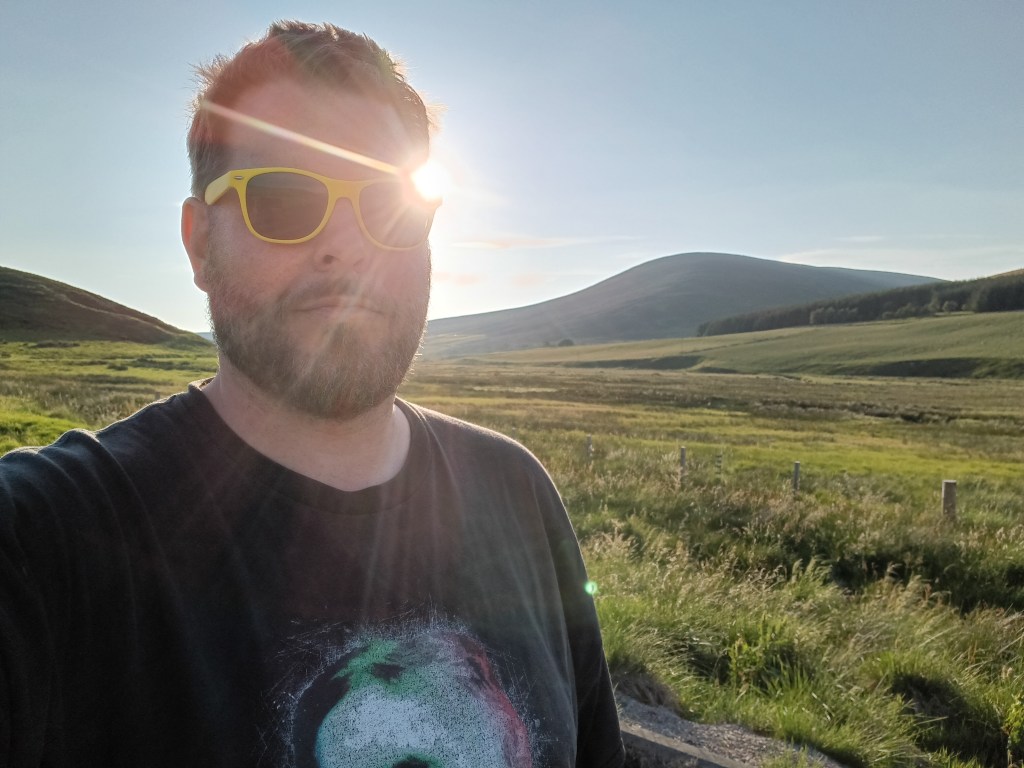
The Cairngorm Mountains were beautiful, and google maps was masterful in plotting a route through the sheep fields, glens and one lane lanes that made the two hour trip three hours, much to my pleasure. The soundtrack was BBC Radio, a perfect match for the countryside. BBC 3 happened to play a song by Blue Peter, a Canadian new wave and synth-pop band of which I had never heard. Of course, I thought of the man Blue Peter AKA Joseph Mair, Malcolm’s best friend, and took it as another blessing. BBC Gael is the best folk music station ever. It plays songs in Gaelic and English, and it is wonderful.
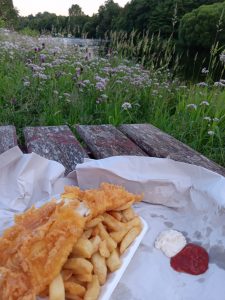
I got hungry along the way but didn’t find any restaurants classless enough for my taste and attire until I got to Grantown-on-Spey just before the fish and chips shop closed at ten. I got the shop specialty to go and a roast beef pie to try as well then took them to the edge of town to eat them in a chapel of wildflowers surrounding a picnic table next to the River Spey lit by the orange and pink lights of the late midsummer sunset.
My accommodations at the eco-lodge in the single room cabin were less than illustrious, and rather frustrating. I drank a few beers that I bought at the co-op by the chipper (I think I might drink more beer if it were sold in every corner store I went to here in the states.) But the midges were terrible in the mountains and I couldn’t get electricity in my cabin because I did not have a pound coin to pay for the pre-pay electricity. Rather quite a bit of a scam! I had already paid 75 pounds for the plastic mattresses and midge-y mountain front porch hadn’t I? I slept hard nonetheless, but woke early again on jetlag time.
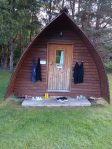
I had gone to sleep uncertain of what to do in the morning. Part of me wanted to drive down to Glencoe and visit the MacDonald Clan memorial there as well as the beautiful scenery before my flight to Dublin at quarter to four in the afternoon. That was the safest plan even if it would be mostly driving, but my real ambition was to climb a mountain and stand atop it with Gibbie.
“Running up like a child that would scale heaven he stood on the bare ground, the head of the mountain, and saw, with an invading shock of amazement, and at first of disappointment, that there was no going higher: in every direction the slope was downward. He had never been on the top of anything before. He had always been in the hollows of things. Now the whole world lay beneath him. It was cold; in some of the shadows lay snow–weary exile from both the sky and the sea and the ways of them–captive in the fetters of the cold–prisoner to the mountain top; but Gibbie felt no cold. In a glow with the climb, which at the last had been hard, his lungs filled with the heavenly air, and his soul with the feeling that he was above everything that was, uplifted on the very crown of the earth, he stood in his rags, a fluttering scarecrow, the conqueror of height, the discoverer of immensity, the monarch of space. Nobody knew of such marvel but him!”
– Sir Gibbie, Chapter 12 “On Glashgar”
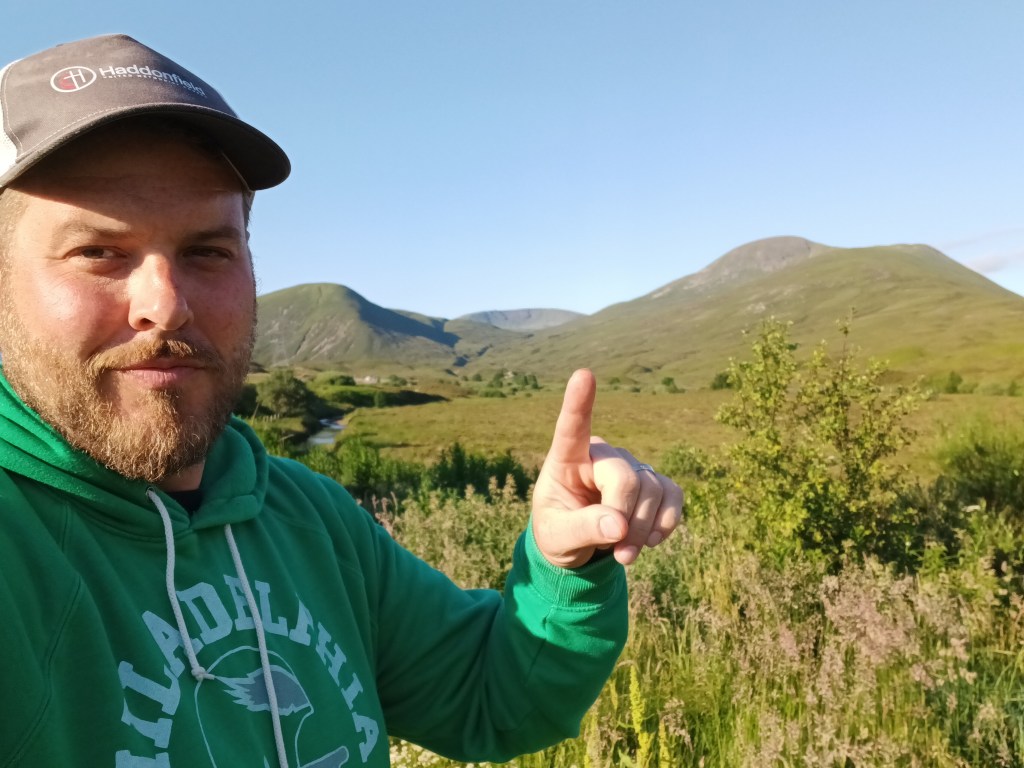
I had researched the possibility of joining Gibbie up there. According to walkinghighlands.co.uk two of the easiest munros to bag were about an hour north of my dark mountain cabin. “Munro bagging” is hiking to all the Scottish summits that are over 3,000 feet tall. Sir Hugh Munro created the first official list in 1891.There are currently 282 Munros in Scotland. I only need 280 more as of July 9, 2026. Geal Chàrn and A’ Mharconaich have been bagged.
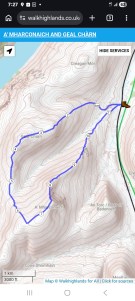
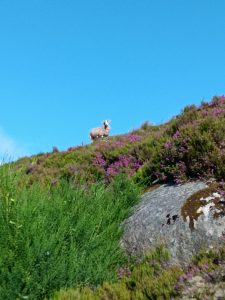
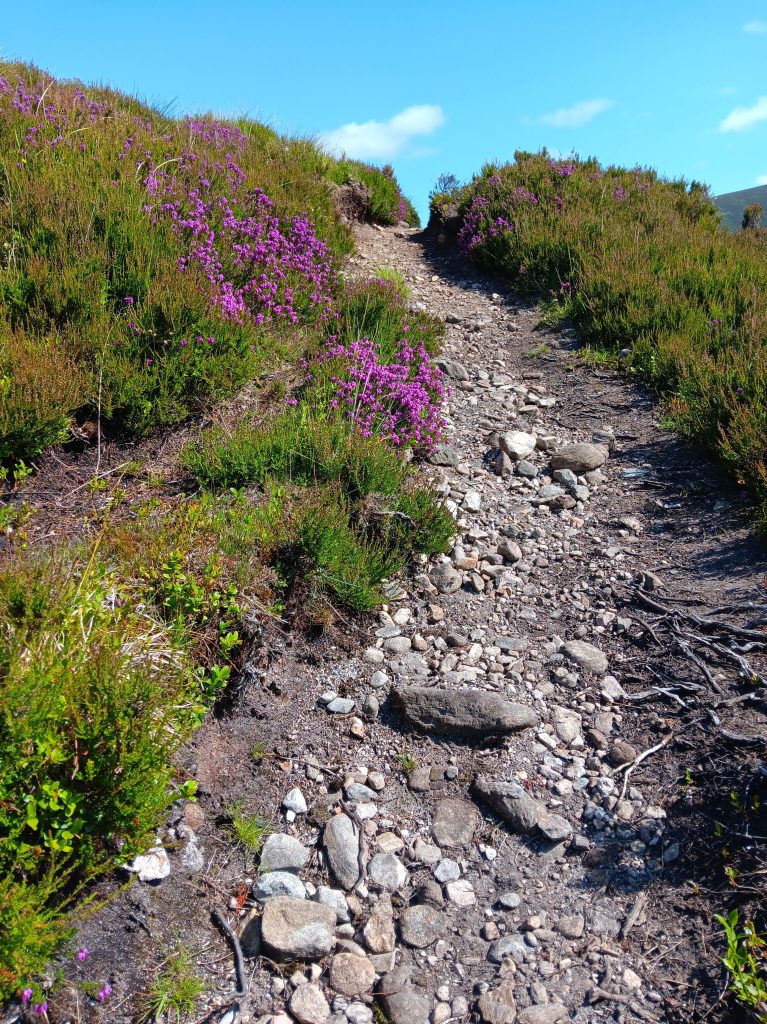
I went for the riskier morning activity since I was up so early and the weather continued to be so beautiful. walkinghighlands.co.uk said it was easy because the trailhead was so close to the highway. The car park is just off the A9 near Balsporran Cottages in Dalwhinnie, but I didn’t notice the four-out-of-five-hiking-boot difficulty on the site until compiling this report. I was on my way before 7:30. The heather was in bloom. The burn was singing and the sheep were peering over ledges at me with curiosity. It was gorgeous!
However it was very, very steep. No switchbacks. Pretty much straight up over wet rocks and muddy paths. Hoping I was half way up the first ascent I wondered aloud, “I don’t know if I can do this.”
I knew I could do it, but I was not sure I could do it in the time I had left before I needed to leave for Inverness Airport to catch my flight. walkinghighlands.co.uk gave a four to six hour average for completing the two-Munro hike. Hopefully half way up Geal Chàrn I wondered why I thought I would be closer to the four hour end of that range. My worry was good fuel to put one foot in front of the other. The two steepest ascents had me taking a three minute breather after every football pitch of progress. But the mountaintops were worth the heaving lungs and sweat. From the cairn atop Geal Chàrn I was told there’d be a grand view over Loch Ericht to Ben Alder, but in the morning mist there was no such view until I descended into the beallach, the narrow gap between the hills. It was indeed grand. But I had decided A’ Mharconaich, at nearly 3,200 feet, was my Glashgar.
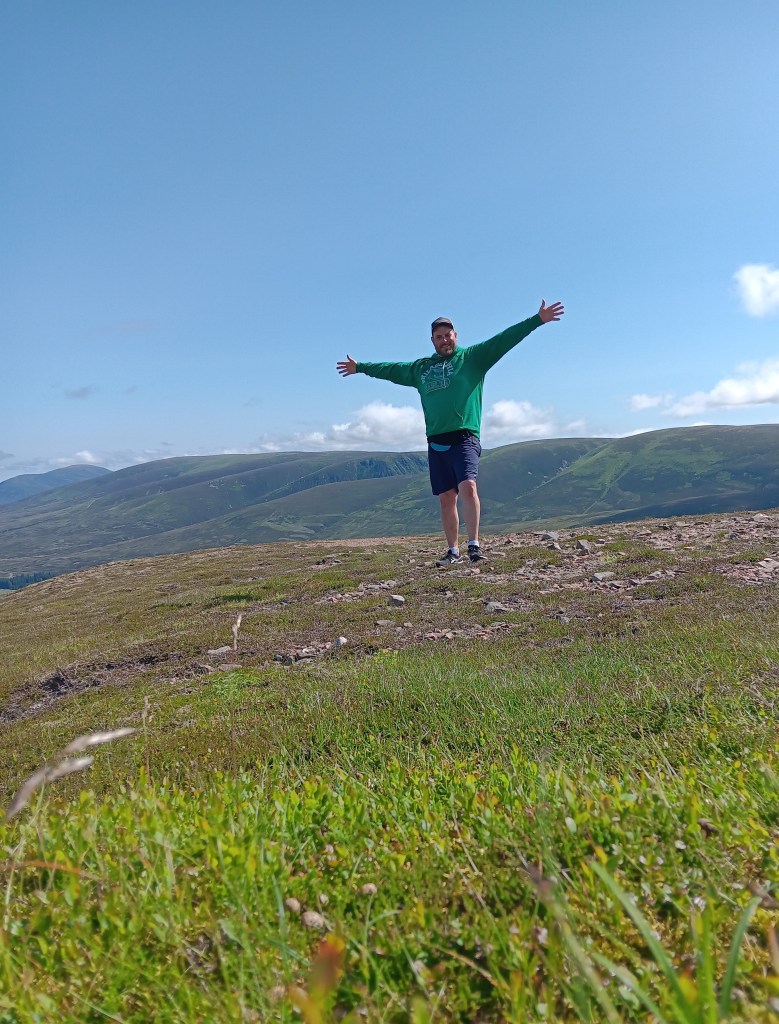
In a glow with the climb, and my soul with the feeling that I was above everything that was, uplifted on the very crown of the earth, I quickly thanked God for my lungs, my legs, the sky and green hills, for Gibbie and his subcreator, George MacDonald.
The descent was a wild gallop punctuated with one mantra, “Do not roll your ankle.” Finally back at the carpark, I did the math on my time. I did it in four hours and fifteen minutes. Pretty dang good! I already wanted to do it again with less worry and more contemplation.
One more instance of Scottish hospitality to report: I was woefully underprepared for this hike in that I only had less than half a liter of water. The woman who was dogsitting for the owners of the Balsporran Cottages answered my knock at the door and cheerfully gave me permission to fill and refill my little water bottle from the outdoor tap as many times as I wanted. I cooled off in the same River Spey by which I had supped the night before and used the shade beneath a bridge as my locker room.
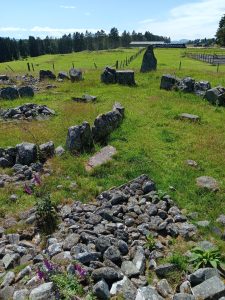
On the way north to Inverness, a straight shot on the A9, I made a final detour to Dalfour Stone Circle, a much more impressive remnant of neolithic culture than the previously mentioned Stannin Steens in Huntly town square, and much further off the beaten track. I felt no spirits there, but my spirit may have been too full to receive anything, either good or evil. I made it to Inverness Airport with plenty of time to spare, especially since my flight was then three and a half hours delayed.
While I waited, I dozed in my chair, enjoyed an easy place to charge my devices, and experienced one more minor miracle.
Linda was sitting next to me watching the drama of a young family waiting for the same flight to Dublin. We exchanged pleasantries here and there, and commiserations about our tattered plans. Linda had arranged for a car to pick her up at the airport, but each time she rescheduled it there was a fee. Her daughter, Sharon, had offered to pick her up from the airport, but this would require a two-hour round trip. I learned this by overhearing their conversation right next to me.
“Excuse me for my boldness, but might I offer you some advice?” I said after she had politely refused Sharon’s offer. She nodded.
“Let your daughter give you a ride.” Linda looked at me puzzled.
“I told you I was a chaplain, right? I work in a senior living community and I know a lot of adult children who want more than anything to help their parents. Yes, it will be a hassle for her, but I guarantee you she really wants to do it. It is a way that she can love you at a time in your life when that’s not so easy to do. It would be a gift for you to let her give you this gift.”
“I think you might be on to something,” Linda said. “Let me check with God.”
And she bowed her head for a moment as I waited in silence.
“Yep, I’m going to call her back. Thank you.”
Linda had been on a silent retreat at a spiritual center for ten days. The theme was “listening to God’s voice.” She said that I had been the voice of God to her, and she had confirmed it in her spirit right there in the noisy airport lounge with the children of the young family squawking in front of us. I was honored but not surprised.
“But do you not sometimes find it hard to remember God all through your work?” asked Clementina.
“Not very hard, my lady. Sometimes I wake up to find that I have been in an evil mood and forgetting him, and then life is hard until I get near him again. But it is not my work that makes me forget him. When I go a-fishing, I go to catch God’s fish; when I take Kelpie out, I am teaching one of God’s wild creatures; when I read the Bible or Shakspere, I am listening to the word of God, uttered in each after its kind. When the wind blows on my face, what matter that the chymist pulls it to pieces! He cannot hurt it, for his knowledge of it cannot make my feeling of it a folly, so long as he cannot pull that to pieces with his retorts and crucibles: it is to me the wind of him who makes it blow, the sign of something in him, the fit emblem of his spirit, that breathes into my spirit the breath of life. When Mr Graham talks to me, it is a prophet come from God that teaches me, as certainly as if his fiery chariot were waiting to carry him back when he had spoken; for the word he utters at once humbles and uplifts my soul, telling it that God is all in all and my God—that the Lord Christ is the truth and the life, and the way home to the Father.”
– The Marquis of Lossie, Chapter 64 “A Visitation”
Amen and amen. Thank you for reading.
– Ben White, September, 2026


Wow, Ben, what an adventure! I hope you get to return some day – maybe rent a cottage and stay for a summer? – to take everything in at a slower pace. But the race you ran this time sounds so YOU. I’m glad for the meaning, the thrill and the joy you found in Scotland (home to my paternal ancestors). It sounds like you made friends all along the way – ‘no surprise to those of us who know you. Thanks for sharing your travel log, your experiences and the lovely pics. Peace, Julie
LikeLiked by 1 person
Yep, dreaming of a return.
LikeLike
Lovely story and gorgeous photos. I stole some of them! Thanks so much serving every day to reaffirm my faith in humanity (which I have to say has been sorely tested of late)!
LikeLiked by 1 person